
Big purchases can either move you forward or quietly hold you back.

For many Pinoys in New Zealand, buying a car or a house feels like a milestone. It’s more than ownership—it’s proof. Proof that the sacrifice was worth it. Proof that you’re “making it.” Proof you can show family back home.
But here’s the truth most migrants learn the hard way:
Not every big purchase is progress. Some become anchors.
Before buying a car or upgrading a home, here are the questions migrants should ask so today’s decision doesn’t become tomorrow’s burden.
The Migrant Context: Why This Is Different for Us
Back home, decisions are often emotional and communal. In New Zealand, decisions are financial, contractual, and unforgiving.
As migrants, we face:
- Temporary visas or uncertain pathways
- Single-income households at the start
- Limited safety nets
- Pressure to “look successful” early
This makes big purchases riskier for us than for locals who grew up with generational assets, stable citizenship, and family backup.
So we need to be strategic, not just aspirational.
PART 1: Buying a Car — Tool or Trophy?
Ask Yourself First: Why do I need this car?
Is it:
- To get to work reliably?
- To manage family logistics?
- Or to reward yourself after years of sacrifice?
There’s nothing wrong with reward—but confusing a reward with a necessity is expensive.
The Hidden Migrant Trap
Many migrants buy:
- Brand-new cars
- High-interest loans
- Long repayment terms
All while still:
- On work visas
- Building credit history
- Adjusting to NZ living costs
A car should support your income, not drain it.
Questions to Ask Before Buying a Car
- Does this car increase or protect my earning ability?
(e.g., commute reliability, second job access) - Can I afford it if my hours are reduced or visa changes?
- Am I buying based on need—or image?
- Have I factored in insurance, fuel, servicing, and depreciation?
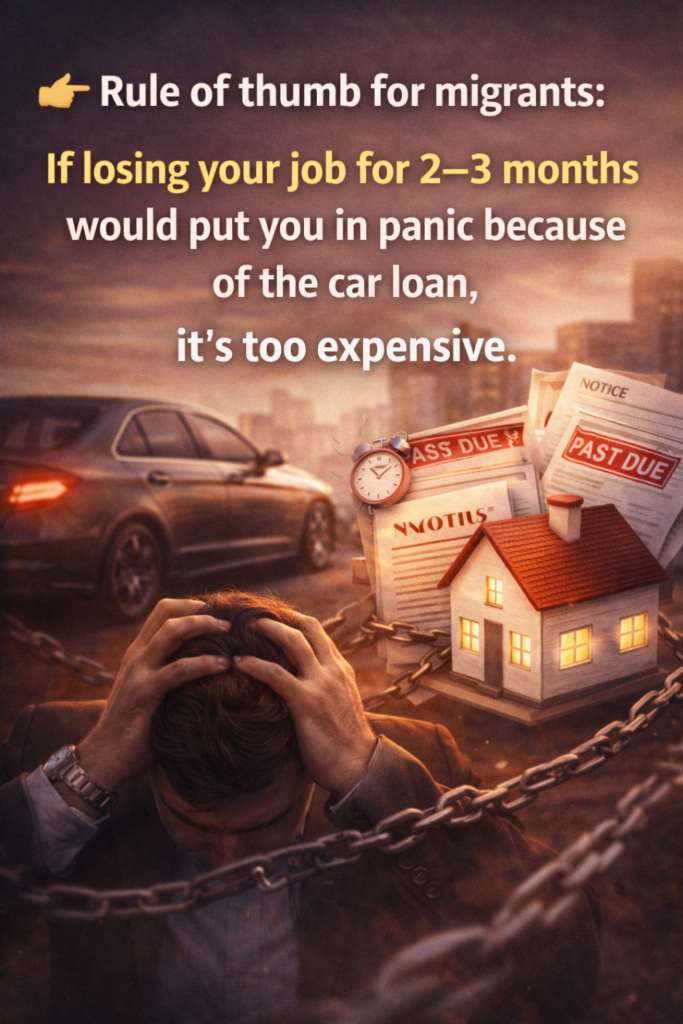
👉 Rule of thumb for migrants:
If losing your job for 2–3 months would put you in panic because of the car loan, it’s too expensive.
PART 2: Buying or Upgrading a House — Stability or Stress?
Home ownership is deeply emotional for Pinoys. It symbolizes:
- Security
- Legacy
- “We made it abroad”
But in NZ, a house is also:
- A 20–30 year legal obligation
- A debt tied to interest rates
- A commitment that limits flexibility
The Timing Question Matters
Buying too early can:
- Lock you into one city
- Limit job opportunities
- Increase stress during visa transitions
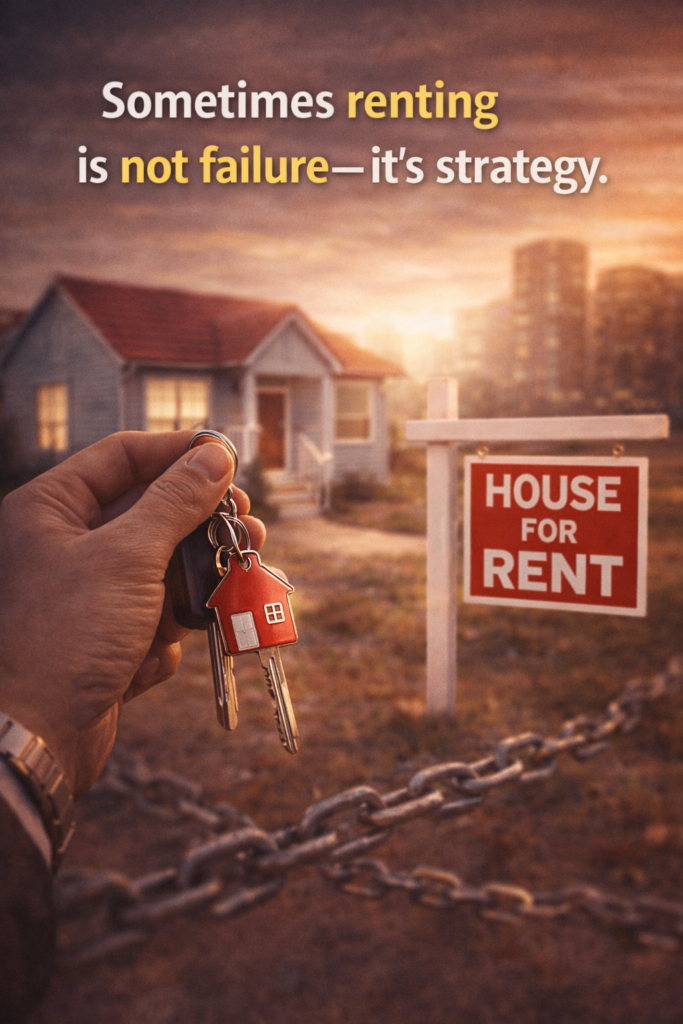
Sometimes renting is not failure—it’s strategy.
Questions Migrants Should Ask Before Buying a Home
- Is my visa status stable enough for long-term debt?
Residency changes everything. Before that, caution is power. - Do I have an emergency fund AFTER paying the deposit?
Not before. After. - Can one income cover the mortgage if needed?
Migrant families are vulnerable to illness, job loss, or study periods. - Am I buying because of pressure—from family, peers, or social media?
- Does this house support our future plans—or trap us in the present?
The Silent Cost: Opportunity Loss
Every dollar tied to a car or house is a dollar not available for:
- Further study
- Business ideas
- Professional registration (e.g., nurses, engineers)
- Emergency relocation
- Supporting family during crises
Many migrants don’t fail because they earn too little.
They struggle because they commit too early.
Emotional Spending vs Strategic Building
After years of homesickness, long shifts, and missed family moments, emotional spending feels justified.
And sometimes—it is.
But ask:
- Will this purchase reduce my stress—or add to it?
- Will it give me flexibility—or lock me down?
- Will future me thank present me?
Big purchases should expand your options, not narrow them.
A Healthier Migrant Mindset
Instead of asking:
“Can I afford it?”
Ask:
“Can I afford it AND still move forward?”
Progress for migrants often looks slower—but it’s usually smarter.
Some of the most successful Pinoys in NZ:
- Drove modest cars for years
- Delayed buying homes
- Focused on residency, skills, and income growth first
They didn’t rush.
They built foundations before trophies.
Final Thoughts for the Community
If you’re:
- Still saving
- Still renting
- Still driving a basic car
You’re not behind.
You’re being careful in a system that punishes mistakes.
And if you’ve already bought:
- A car
- A home
- Or both
This isn’t judgment—it’s reflection. Adjustments can always be made.
Migration is not a race.
It’s a long game.
And the goal isn’t to look successful early—it’s to stay standing long-term.