


Buying your first home in New Zealand feels exciting and terrifying at the same time. One minute you’re imagining family dinners in your own dining room. The next minute you’re staring at bank numbers, legal terms, and wondering if you’re being overly ambitious—or not ambitious enough.
For many Filipinos living in NZ, first-home ownership isn’t just a milestone. It’s proof that all those sacrifices—leaving family behind, working long hours, starting from scratch—actually led somewhere solid.
This article shares real insights from Pinoys who’ve already crossed that bridge. Not the Instagram version. The real one. What surprised them, what they wish they knew earlier, and how you can prepare smarter for buying your first home in 2026.
“Akala namin imposible—hanggang naging posible”
A common story among Filipino migrants goes like this: “We didn’t think buying a home in NZ was for people like us.” Many grew up renting back home, or in families where property ownership felt distant. That mindset quietly follows you overseas.
But here’s the shift happening now. The NZ housing market in 2026 is noticeably more friendly to first-home buyers than it was a few years ago. Prices in many areas remain below previous peaks, and interest rates have stabilised. More importantly, banks are approving more low-deposit loans again—especially for first-home buyers with steady income and clean records.
Several Pinoy families shared that the moment things changed was when they stopped asking “Can we afford Auckland?” and started asking “Where can we build a good life?” That mindset unlocked options in Hamilton, South Auckland, parts of Wellington, Christchurch, and regional centres where houses are still realistic for working families.
KiwiSaver: The quiet hero most Pinoys underestimate
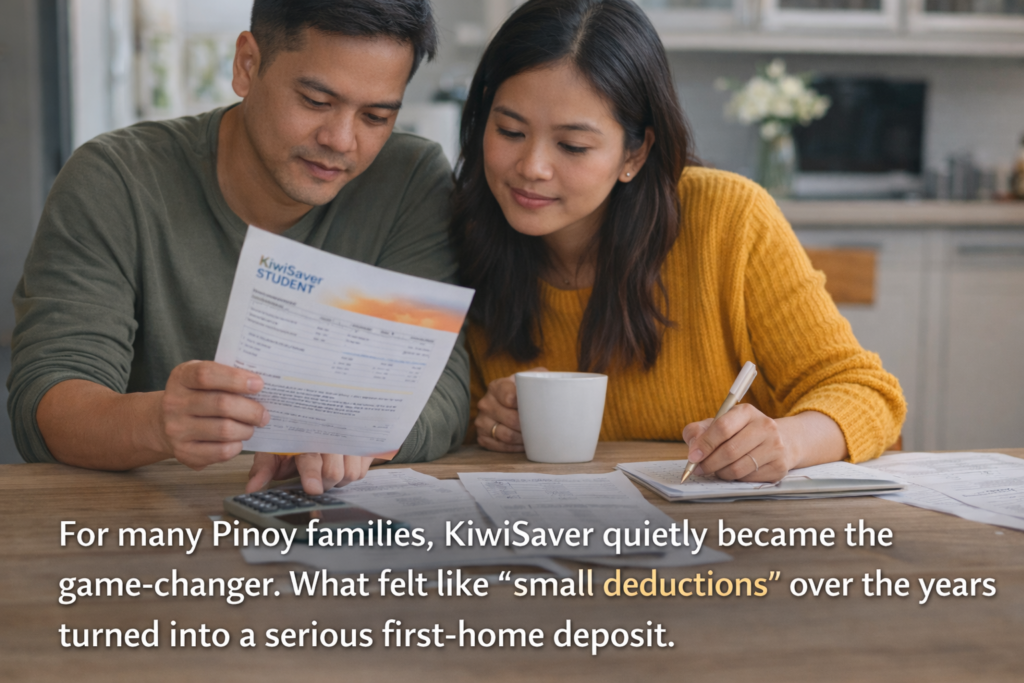
If you’ve been working in NZ for a few years, there’s a strong chance KiwiSaver will be your biggest weapon. Many Pinoys said they didn’t fully understand how powerful it was until they talked to a mortgage adviser.
Between your own contributions, employer contributions, and government credits, KiwiSaver can turn years of “small deductions” into a serious deposit boost. Several families were shocked when they realised their combined KiwiSaver balances covered most—sometimes all—of their required deposit.
The catch? Timing matters. You need to be eligible, and you can only withdraw for your first home. People who switched jobs frequently or opted out early often wished they’d stayed consistent.
Lesson learned: even if buying still feels far away, stay in KiwiSaver unless there’s a very good reason not to.
Visa status: the detail that can stop everything
This is where many Pinoys get caught off guard.
Not all visas allow you to buy a home. In most cases, you need residency or citizenship. Some people only found this out after falling in love with a house. That’s a heartbreak you can avoid.
Several migrant families shared that aligning their residency timeline with their home-buying plan saved them stress and money. They focused first on securing residence, then shifted fully into saving and pre-approval mode.
If you’re on a work visa, student visa, or still transitioning, don’t guess. Confirm your eligibility early. It changes everything.
“Hindi lang pala deposit ang gastos”
Almost every first-home buyer said the same thing: “We budgeted for the deposit—but not for everything else.”
Legal fees, builder’s reports, valuations, insurance, moving costs—it adds up fast. One Pinoy couple shared that skipping a proper building inspection almost cost them tens of thousands in repairs later. The report felt expensive at the time, but it saved them from a very bad decision.
Another family learned the hard way that banks don’t just look at income. They look at spending habits. Reducing short-term debts, cleaning up buy-now-pay-later accounts, and showing consistent savings made a big difference in approval terms.
Community wisdom beats Google searches

What stood out most in these stories wasn’t financial strategy—it was community.
Pinoys leaned on friends who had already bought homes. They asked uncomfortable questions. They shared agent contacts. They compared notes on suburbs, schools, flood zones, and commute times.
One family rented for years in the same area they wanted to buy in. They walked the neighbourhood, attended community events, and learned which streets flooded in winter. When they finally bought, there were no surprises—just relief.
That’s classic Pinoy wisdom: observe first, decide later.
Preparing now for a 2026 purchase
If you’re thinking about buying your first home, preparation beats speed every time.
Get pre-approval early—not because you’re ready to buy tomorrow, but because it shows you what’s realistic. Know your numbers. Build a buffer. Assume something will go wrong, and plan for it.
Most importantly, adjust your mindset. Home ownership in NZ doesn’t have to mean a perfect house, a big section, or a postcode that impresses relatives back home. For many Pinoys, the first home is simply a stable base—a place where rent won’t increase next year and where kids can grow without constant moving.

The real takeaway
Every Pinoy who shared their story said the same thing in different words: the hardest part wasn’t money, paperwork, or banks. It was believing they were ready.
Once that belief clicked, everything else became manageable. Not easy—but manageable.
Buying your first home in NZ will still feel scary. That fear doesn’t disappear. But with real stories, proper preparation, and the strength of community, it stops being a fantasy and starts becoming a plan.
And plans—especially Filipino ones—have a funny habit of becoming reality.