

The NZ sun is not the same sun we grew up with.
That sentence surprises a lot of Filipinos when they first arrive in New Zealand. After all, we come from a tropical country. We grew up under strong sunlight, beach trips, and long afternoons outdoors. We’re used to heat. We’re used to brightness. Many of us even grew up believing that darker skin meant natural protection.
Then summer hits in New Zealand—and suddenly people are talking seriously about sunscreen, hats, long sleeves, and UV warnings. At first, it feels excessive. Later, it starts to make sense.
This article explains why sun protection matters more here, what research in NZ tells us, and how Pinoy families can enjoy summer without fear, stress, or unnecessary anxiety.
Why the NZ sun feels different (because it actually is)
New Zealand regularly records some of the highest UV (ultraviolet) radiation levels in the world, especially during spring and summer. This isn’t about temperature. A mild, breezy 22°C day can still have extremely high UV levels.
There are a few reasons for this:
First, New Zealand sits closer to a region of thinner ozone layer compared to many parts of the world. The ozone layer normally absorbs UV radiation, so when it’s thinner, more UV reaches the ground.
Second, NZ has very clean air. That sounds like a good thing—and it is—but it also means there’s less pollution to scatter or absorb UV rays. More sunlight reaches your skin directly.
Third, the country’s geography and seasonal sun angle mean UV can spike quickly, even outside peak summer heat.
This is why you’ll hear locals say, “If you can see your shadow clearly, you need sun protection.” It’s not exaggeration—it’s lived experience backed by decades of research.
“Moreno tayo”—but that doesn’t mean immune
One of the most common misconceptions in the Pinoy community is that darker skin doesn’t burn or doesn’t need sunscreen.
Here’s the truth: melanin offers some protection, but not enough in NZ conditions.
Research consistently shows that people with darker skin tones can still experience sun damage, premature aging, eye damage, and skin cancers. The difference is that symptoms may appear later and be diagnosed later—sometimes when the damage is already advanced.
In New Zealand, melanoma and other skin cancers are among the most common cancers nationwide. While rates are highest among fair-skinned populations, health authorities have repeatedly warned that migrants and people of colour are often diagnosed later because they underestimate their risk or delay checks.
In short: moreno skin helps, but it is not armor.
Sunscreen isn’t optional here—it’s infrastructure
In NZ, sunscreen is treated almost like seatbelts. You don’t argue whether you “feel like” wearing it. You use it because the environment demands it.
Local health guidance consistently recommends:
- Broad-spectrum sunscreen (protects against UVA and UVB)
- SPF 30+ minimum (SPF 50+ is common and encouraged)
- Reapplication every 2 hours, or after swimming or sweating
Many Filipino families are surprised at how often sunscreen needs to be reapplied. One morning application is not enough. The UV here doesn’t politely wait.
A useful mindset shift: sunscreen is not cosmetic—it’s protective equipment.
Kids, schools, and why NZ takes this seriously
If you have children in NZ schools or early childhood centres, you’ve probably noticed strict sun policies. Hats are mandatory in summer. Outdoor play may be limited during peak UV hours. Sunscreen reminders are common.
This isn’t over-parenting. It’s public health strategy.
Childhood sunburn significantly increases the risk of skin cancer later in life. NZ research has been clear on this for years, which is why schools are proactive rather than reactive.
For Pinoy parents, this can feel unfamiliar at first. Back home, kids play under the sun all day. Here, the rules are different because the risk profile is different.
Following these policies isn’t being “too careful.” It’s adapting to local reality.
Enjoying summer without fear or stress
Sun safety in NZ is not about hiding indoors or avoiding beaches. Kiwis love the outdoors. The goal is smart exposure, not avoidance.
Here’s how many Pinoy families successfully adapt:
They plan outdoor activities earlier in the day or later in the afternoon, when UV levels are lower.
They use physical protection: hats, sunglasses, light long-sleeved clothing. Clothing is often more reliable than sunscreen alone.
They normalize sunscreen use as part of the routine—next to brushing teeth, not as an emergency response.
They watch the UV index, not just the weather forecast. Many weather apps in NZ include UV levels because temperature alone is misleading.
Most importantly, they remove the fear. Sun safety becomes habit, not anxiety.
Vitamin D: the balance question
A common concern is vitamin D. Filipinos are already at higher risk of vitamin D deficiency after moving to NZ due to lower sun exposure and lifestyle changes.
The good news is that you don’t need sunburn to get vitamin D.
Short, regular exposure outside peak UV hours—combined with diet and supplements when recommended by a GP—is usually enough. NZ health guidance emphasizes balance, not extremes.
Protecting your skin does not mean depriving your body. It means being intentional.
A quiet cultural shift worth making
Many Pinoys who’ve lived in NZ for years say this is one of the habits they’re most grateful they adopted early—especially as they get older.
Sun damage is cumulative. You don’t feel it immediately. You see it years later.
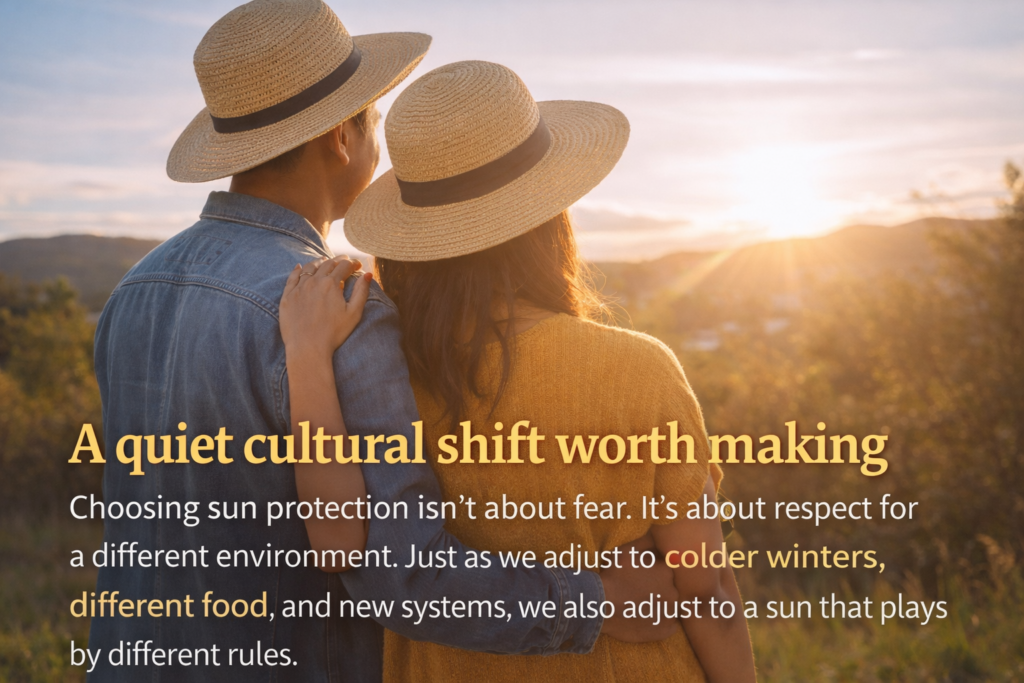
Choosing sun protection isn’t about fear. It’s about respect for a different environment. Just as we adjust to colder winters, different food, and new systems, we also adjust to a sun that plays by different rules.
The takeaway for the Pinoys in NZ community
The NZ sun is not the sun we grew up with—and that’s okay.
Learning to protect ourselves and our families doesn’t mean abandoning who we are. It means understanding where we are.
Sun safety here is not a trend, a scare tactic, or a beauty standard. It’s a practical response to real environmental conditions, backed by decades of local research and lived experience.
With the right habits, we can enjoy beaches, barbecues, walks, sports, and summer festivals—without fear, guilt, or stress.
Adaptation is part of migration. This is one adaptation that quietly pays off for life.