
A familiar Filipino table, a New Zealand leader—and a reminder that belonging grows through participation and contribution.
I Shook the Prime Minister’s Hand — and Went Home Thinking About My First Winter
Let me tell you where my mind went.
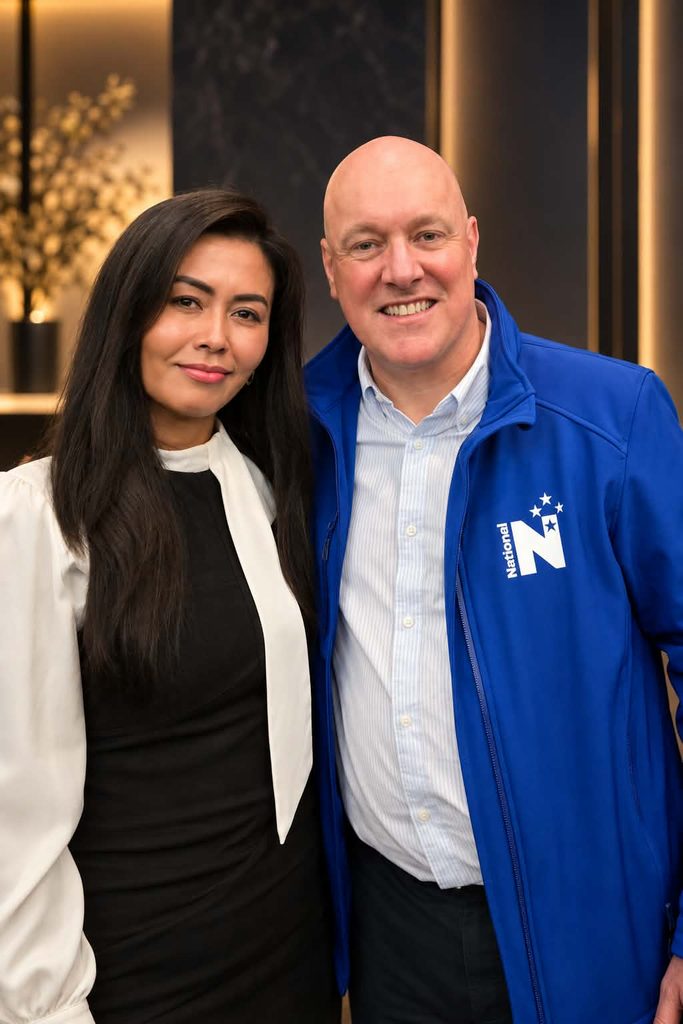
I was with. Rt Hon Christopher Luxon came down the line, we shook hands, there was a short exchange and a photo.
And standing there, in that room, in those shoes — my mind went straight back to my first winter in New Zealand.
I remember the flat, the shift work, the cold, the first paycheck.] I remember counting coins. I remember converting everything to pesos and flinching. I remember crying in a bathroom at work and then fixing my face and going back out, because that’s what we do.
A handshake and a conversation, and all of that came back at once.
Nobody tells you when you’ve arrived
Here’s what I’ve realised, kabayan.
There’s no ceremony for it. Nobody taps you on the shoulder and says, you made it, you can stop surviving now. The visa comes. Then residency. Then one day you notice you haven’t converted a price to pesos in months, and your kids are correcting your pronunciation, and you’re the one answering questions in the group chat instead of asking them.
You arrived somewhere along the way and didn’t notice.
I speak to internationally qualified nurses every week who are exactly where I was in that first winter. Registration paperwork. CAP course costs. Competence assessments. The fear that your ten years of experience back home might count for nothing here. That’s real, and I will never minimise it.
But I also speak to nurses who are five, eight, twelve years in. Registered. Settled. Buying houses. Sending kids to university here.
And many of them are still living as though it’s their first winter.
The question the handshake left me with
I didn’t walk away from that room thinking about politics.
I want to be very clear about that, because I know how these photos get read. This is my own reflection, not an endorsement of any party or any policy. I met the person who currently holds the office. I’d have written this same piece after meeting whoever held it. Who you vote for is yours — I’m not here for that conversation.
What I walked away with was simpler and more personal:
We came here asking what New Zealand could give us. At what point do we start asking what we can give back?
Not out of guilt. Not because we owe anyone an apology for coming. We paid for our place here — in night shifts, in missed birthdays back home, in years of being the one who left.
But because giving back is what established people do. And many of us are established now, whether we’ve admitted it or not.
What it actually looks like — practically
When I say “give back,” I don’t mean something grand. I mean this:
Be the person you needed. You survived NZQA. You survived your first competence assessment. You survived a manager who didn’t understand your accent. Somebody three years behind you is drowning in exactly that. One coffee. One voice message. One honest answer. That’s it — that’s the whole thing.
Say yes to the room. School board. Union delegate. Charge nurse. Council submission. Industry group. These seats sit empty, and they are almost never filled by us. Our community is not absent because we’re not capable. We’re absent because nobody told us we were allowed.
Hire and back someone. If you run a business now, or you’re senior enough to sign off on a hire, you’re standing on the other side of a door you once knocked on. Who you open it for matters more than any donation.
Show up outside our own circle. This is the hard one. It’s natural to give to the Filipino community first — and we should. But belonging to New Zealand also means the beach cleanup, the food bank, the local school gala that has nothing to do with where we came from.
You’ll notice none of that needs a Prime Minister. That’s my point. The handshake didn’t give me permission. It just made me see I’d been waiting for one.
Belonging isn’t granted. It’s built.
I used to think belonging was at the end of the paperwork queue. Visa, residency, citizenship — then finally, you belong.
I don’t believe that anymore.
Papers make you a resident. What makes you a local is the pile of evidence that you’ve invested here: the people you helped, the rooms you showed up in, the problems you took on that weren’t yours.
So this month I’m asking myself, and I’m asking you:
What does giving back look like for you — specifically, this year, in your own suburb, with the skills you already have?
Not someday. Not when you’re more settled. You’re more settled than you think.
Sometimes, a simple meal can say more than a formal speech.
During his official visit to the Philippines in April 2024, New Zealand Prime Minister Christopher Luxon made Jollibee EDSA Buendia his first restaurant stop in Manila.
Accompanied by New Zealand Ambassador Peter Kell and Paulo Garcia—New Zealand’s first Member of Parliament of Filipino descent—the Prime Minister sampled some unmistakably Filipino favourites: Chickenjoy, Jolly Spaghetti, Champ Burger, Peach Mango Pie and Jollibee Chicken Nuggets.
There were photographs, conversations with customers and crew, and even a warm welcome from the famous red-and-yellow bee.
For Filipinos, however, Jollibee is rarely “just fast food.”
It is the taste of childhood birthdays, family celebrations, after-school treats and balikbayan homecomings. For Filipinos living overseas, seeing that familiar smiling bee can bring back memories of home before the first bite is even taken.
That is why this light-hearted moment resonated.
It was not important because a political leader ate fried chicken and spaghetti. It mattered because something deeply familiar to Filipinos was recognised and enjoyed in a public moment involving New Zealand.
For our growing Filipino community in Aotearoa, recognition carries meaning.
But belonging cannot stop at being noticed.
Filipinos across New Zealand are already helping care for patients, teach children, build businesses, support families, strengthen churches and community groups, and keep essential workplaces moving. We participate not only in cultural celebrations but in the everyday life of the country we now call home.
Our food may introduce us, but our contribution tells the fuller story.
Belonging grows when we show up, participate and take responsibility for the communities around us. It grows when we understand how New Zealand works, join local conversations, volunteer, vote when eligible, support our neighbours and confidently share the best of Filipino culture.
The Jollibee visit offered a cheerful image of connection between the Philippines and New Zealand. Yet the more important story continues far beyond that restaurant.
It is being written every day by Filipinos who bring their skills, faith, humour, hospitality, resilience and hard work into Kiwi life.
A plate of Chickenjoy may create a moment of familiarity.
Participation creates belonging.
Contribution builds a shared future.
Editorial note: This community-interest article refers to Prime Minister Christopher Luxon’s documented visit to Jollibee in Manila on 18 April 2024. It is not a political endorsement of any person, party or policy.
The visit details are documented by the Jollibee Group. The article deliberately avoids discussing policies, parties or electoral issues.