We don’t have to leave our pagka-Filipino behind to thrive in New Zealand.
We can carry the warmth, the faith, the generous care for family — while learning new habits that help us grow here in Aotearoa. As the Te Ara Encyclopedia of New Zealand notes, traditional Filipino values like pakikisama (smooth social relations), amor propio (self-esteem), and utang na loob (reciprocity) still bind our community together here, even thousands of miles from home.
Here are the habits many Filipinos have learned to borrow from Kiwi culture — not to replace the heart, but to strengthen it.
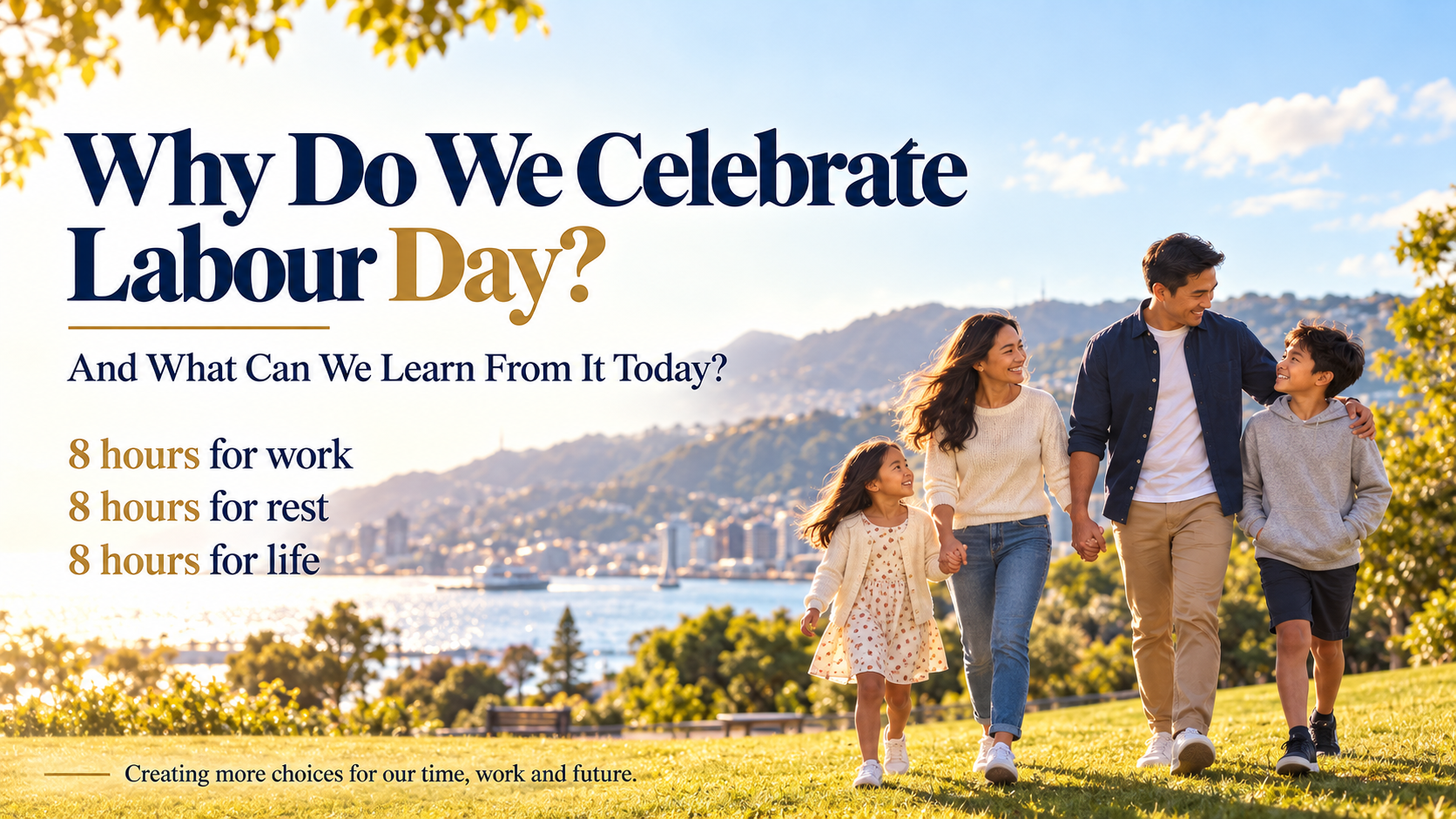
1. Work-Life Balance — Discipline at Work Shouldn’t Consume the Whole of Life
This is probably the most noticeable adjustment for many Filipinos. Back home, long hours and high pressure are the norm. Here, there’s time for work — and there’s time that’s genuinely set aside for family.
In a personal account published in BusinessMirror, Joel C. Paredes wrote about his brother Noel, an engineer who has lived in New Zealand for more than 25 years. According to the piece, the most evident change for many Filipino workers is the ability to maintain a strong work ethic while still being present as a parent — a balance that’s often hard to achieve back in the Philippines, where long hours and high-pressure environments are common.
The lesson: Going home on time isn’t a failure of dedication. It’s recognising that family is also “work” that deserves daily attention.
2. Being On Time — A Sign of Respect, Not a Loss of Warmth
In New Zealand, punctuality isn’t just a workplace rule — it’s a way of showing respect for other people’s time. That’s a real shift from the familiar “Filipino time,” where running late is often quietly accepted as normal.
Many Filipino migrants gradually learn that punctuality isn’t about being “cold” or rigid — it’s part of how trust is built in Kiwi society. And honestly, even within our own culture of pakikisama, we already value people who keep their word about time. So this isn’t really against our values — it’s simply an extension of them.
3. Respecting Boundaries — It’s Okay to Set a Limit
In Filipino culture, utang na loob and pakikisama run deep — which can make it hard to say no to family or friends. In New Zealand, personal space and the ability to say “no” without guilt are more openly respected.
That’s not selfishness. In fact, setting healthy boundaries — around time, money, and personal peace — is one of the ways we protect the strength we need to keep showing up generously for the people who matter most to us.
4. Independence — Learning to Rely on Yourself
Coming from the close-knit family and neighbourhood ties of the Philippines, many migrants experience a real cultural shift toward a more individual way of living here — where you’re expected to handle your own responsibilities, from household chores to long-term planning.
That doesn’t mean forgetting the spirit of helping each other out. If anything, this kind of independence becomes a tool — it makes us more capable of helping others, because we’re more steady on our own feet first.
5. Fairness and “Give Everyone a Chance”
According to a 2023 study by The Research Agency, fairness is one of the values New Zealanders care about most — 68% of respondents said fairness matters to them, and migrant communities in particular tend to rate New Zealand’s fairness even more positively than long-term residents do.
This is the idea behind “fair go” — the belief that opportunity should be based on merit, not connections or “who you know.” For many Filipino migrants, this is a striking contrast to experiences back home, where connections and influence can carry a lot of weight.
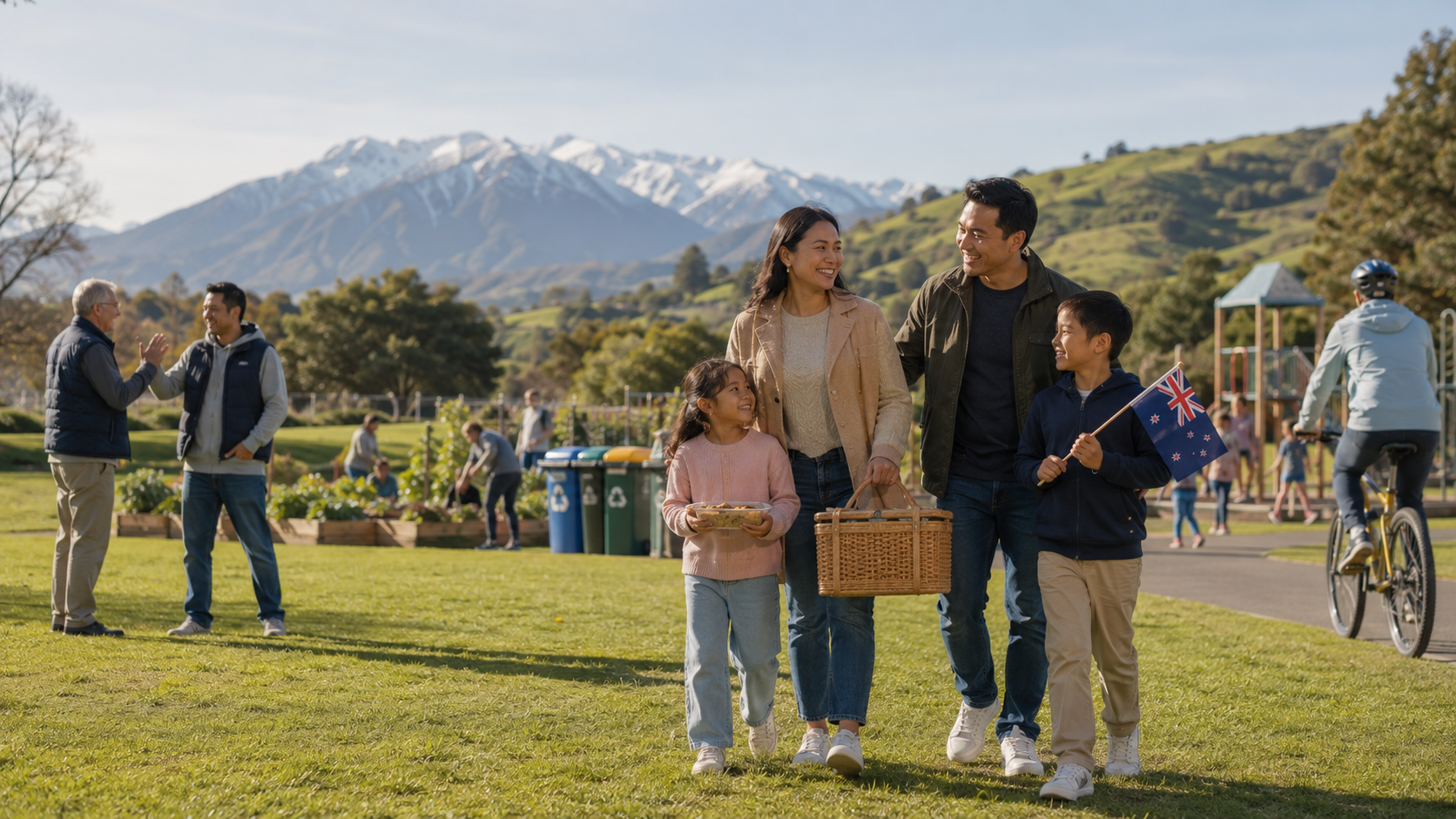
6. Volunteering — Giving Without Expecting Anything Back
Jovenal Cardinoza, President of the Clutha Filipino Society in Balclutha and a former dairy farmer from the Philippines, shared his experience of community involvement: “I just love to promote our culture and be a part of community events.” Under his leadership, the Society runs cultural presentations at local rest homes, organises basketball tournaments, and has raised funds for flood victims in Davao, Philippines — alongside regular celebrations for Araw ng Kagitingan and Araw ng Kalayaan.
He also said: “People in the community are friendly, loving and accommodating. They are nice and respectful and give a lot of help and concern.”
The culture of volunteering here in New Zealand — through schools, churches, and community groups — isn’t really foreign to us. It’s an extension of bayanihan, just wearing a new shape here in Aotearoa.
7. Caring for Nature — Part of Everyday Life
From recycling habits to keeping parks, beaches, and walking tracks clean, many new migrants notice just how seriously Kiwis take care of the environment. For Filipino families, this connects easily to our own respect for nature — whether back home or here, we already carry a deep appreciation for land, sea, and the natural world as part of everyday life.
Joining local clean-up days or community gardens is also a good way to become part of the local community while teaching our kids the value of caring for the environment.
8. Simplicity and Less Comparison — Possessions Aren’t Always the Measuring Stick
In New Zealand, there’s noticeably less pressure to display wealth through things — cars, gadgets, brand names. Everyday life tends to be simpler, with less of the “keeping up” culture that can be more pronounced in cities back home.
Many Filipinos gradually come to appreciate this simplicity — not because they lack the means, but because they discover life feels lighter when you’re not constantly measuring yourself against a neighbour or relative.
9. Teaching Children Confidence and Responsibility
Research on parenting styles shows that an “authoritative” approach — one with clear expectations, but also openness to conversation and explanation — tends to be linked to children with stronger self-confidence and a greater sense of responsibility. This is the style many New Zealand schools quietly encourage: kids are invited to ask questions, make decisions, and take ownership of their actions from a young age.
For many Filipino parents, this isn’t a loosening of discipline — it’s an expansion of it. Paired with values already instilled at home, like respect for elders, giving children room to speak up and decide for themselves helps them grow into grounded, principled individuals.
The Heart Doesn’t Get Lost
Through all of these habits we’re learning — discipline with time, respect for boundaries, balance in life, and an openness to fairness — there’s one thing we don’t have to change: the heart.
We can learn new habits while holding on to the love we’ve always carried — for family, for community, for God. This isn’t a trade of identity. It’s growth — with our Filipino-ness fully intact.
📬 Subscribe to the Newsletter
Want more real stories from the Filipino community across New Zealand — surveys, lessons learned, and the everyday wins of our kababayan? Subscribe to the newsletter so you don’t miss the next one.
[Subscribe Now →]
Sources: Te Ara Encyclopedia of New Zealand (“Filipinos – Culture”); BusinessMirror, “New Zealand’s Sense of Belonging: The Filipino Journey to ‘Middle-earth'” by Joel C. Paredes (Jan 2026); The Research Agency, “Fair Go Culture: Why Fairness Is Important for New Zealand Brands” (2023 study); Asia Media Centre, “The Filipino Cultural Heart of South Otago” (interview with Jovenal Cardinoza, Clutha Filipino Society).